
Men’s mental health in Canada
What stops so many men from getting the help and support they need?

You’re feeling sad, angry, lost, and stressed, and none of the usual things that once made you feel better are helping anymore. You block the feelings. You push through, just like you always do, but you are more irritable than usual — getting a little too angry at work and with the people you love most. Maybe you pour yourself an extra drink after work just to take the edge off. When your partner asks what’s wrong, you snap back and say you’re fine. Because the question touches a nerve — and because you don’t even know what is wrong yourself.
For many men who reach this point, they continue doing what they have always been taught to do — modelled by fathers, reinforced by peers, and encouraged by society as the way to survive and be a “good man.” Be tough. Don’t show emotion because emotion is vulnerability, and vulnerability is weakness. Showing weakness is not masculine.
So, you keep showing up. You put one foot in front of the other. You don’t stop to feel. Instead, you cover everything over by ignoring the feelings and using food, alcohol, weed, work, or distraction to tamp it all down.
But when you never pause to ask yourself why you are behaving the way you are, and you don’t recognize that you are in emotional distress, those feelings do not disappear. They live in the body. They build up over time and eventually spill out — often as anger, one of the few emotions many men feel permitted to express openly.
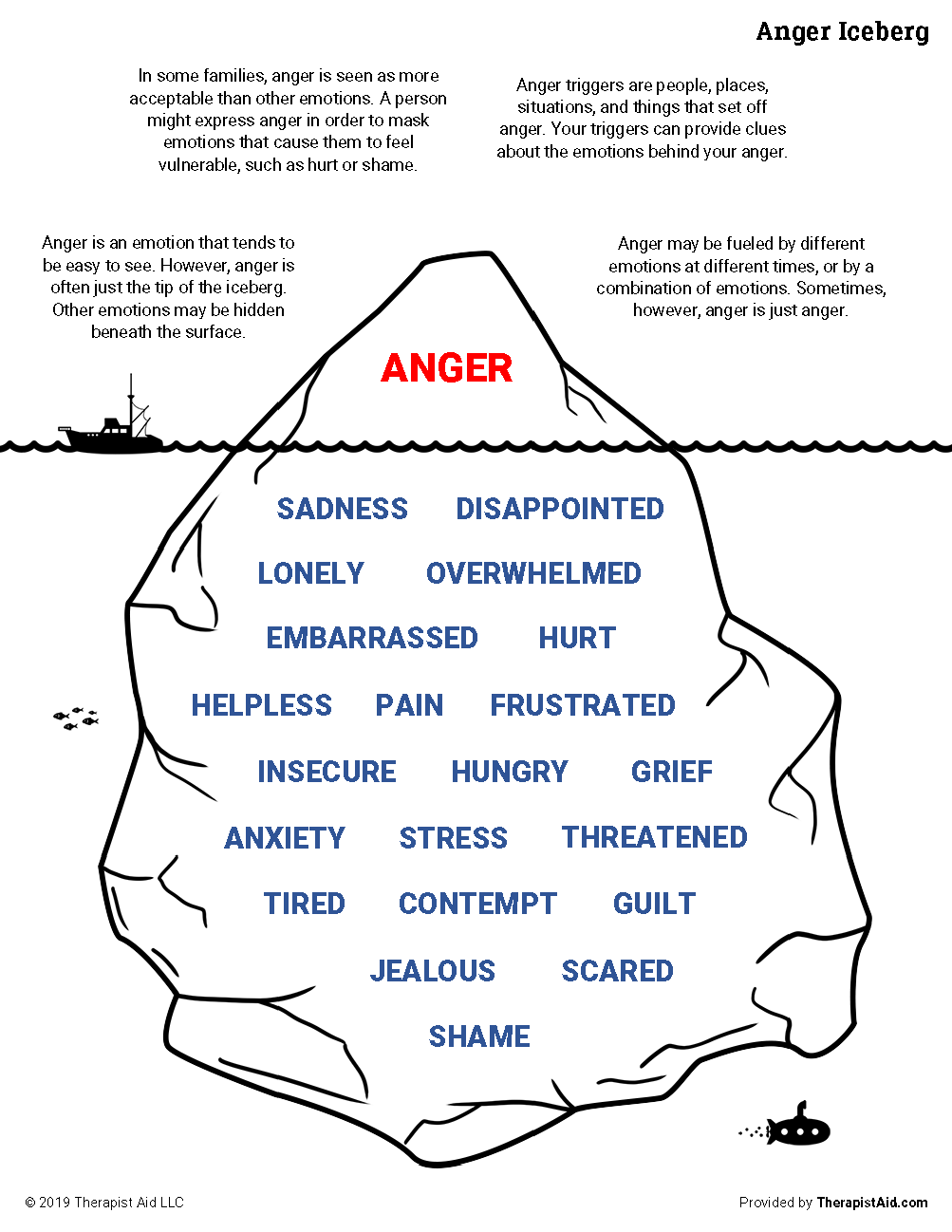
Men and anger are a common pairing, and when you look at the illustration of the anger iceberg below, it becomes easier to understand why. Anger is only the visible tip of the iceberg. Underneath are sadness, loneliness, grief, fear, shame, insecurity, disappointment, and emotional pain.
It is no wonder, then, that men account for approximately 80 percent of suicides in Canada, and that suicide remains the second leading cause of death among Canadian men under 50, with additional spikes during middle age. Yet despite the fact that so many men are struggling with anxiety, depression, stress, trauma, and burnout, relatively few access therapy or mental health support.
In February, the Federal Government launched a campaign focused on improving the health and well being of men and boys in Canada. The initiative aims to create “supportive and safe environments, challenge harmful stereotypes, reduce stigma and encourage men of all ages to seek help when they need it.”
Not only are men less likely to seek mental health support, they are also less likely to seek medical care for physical health concerns. Increasingly, healthcare professionals recognize the strong connection between physical and mental health, particularly when chronic stress, emotional suppression, and untreated mental health challenges are involved.
Reframing mental health in a way that feels more approachable and relatable to men may help more people access support.
Many men are more comfortable opening up during a shared activity — walking, driving, golfing, exercising, or working side by side — rather than through direct face-to-face conversations. Author Rob Whitley describes this as a “shoulder-to-shoulder” approach in a 2022 Psychology Today article.
Whitley also notes that reframing therapy and mental health interventions as “programs,” “mental fitness,” “coaching,” “training,” or “workshops” may make support feel more accessible and less intimidating for some men.
Men’s mental health as a distinct area of focus is still relatively new in Canada, but the need for greater awareness, support, and accessible therapy is clear. If you or a man you care about is struggling with stress, anxiety, anger, depression, trauma, or emotional overwhelm, you are not alone. Reaching out for support is not weakness — it is an important step toward feeling better, building healthier relationships, and improving overall wellbeing.
At the heart of therapy is the opportunity to speak openly, honestly, and without judgment. Finding a therapist you feel comfortable with can help you begin to unpack the things that have been weighing you down for far too long.